My Complete Guide to Banff in Winter (Is it the Right Time to Visit?)
If you’re planning a trip to Banff in winter, you might want to read this first! Let’s just say, coming from Montreal, I’m used to harsh Canadian winters but even I learned a few things.
Canadian winters are not for the faint of heart, especially in the Canadian Rocky mountains. This is my detailed guide on when to visit Banff in winter, what to expect, what to pack, and so much more. This way, you can decide if traveling to Banff in the winter months is the best option for you!
Psst! This blog post contains affiliate links in it which sends me a bit of extra money if you use them… at no extra cost to you!
10 Things To Know About Visiting Banff in the Winter
1. Bears Hibernate But There’s Now an Avalanche Risk
The biggest fear when traveling to Banff in the summer are bear attacks. You need bear spray, and to constantly be talking to your peers, or yourself! But bears hibernate in the winter – which is GREAT!
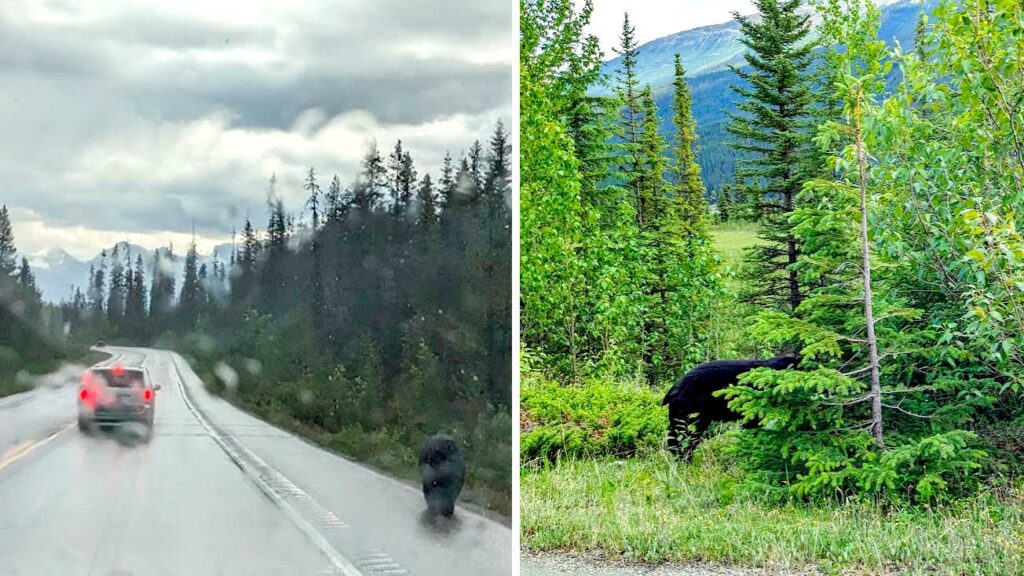
When I traveled to Banff in June, this was my biggest concern, and for good reason. I saw two bears walking on the side of the road during my one week trip. And certain trails were completely closed due to bear sightings.
But in the winter you do have to worry about avalanches… and cougars. So you aren’t completely out of the woods… pun intended! You can safely go on hikes without the risk of seeing a bear, but stay up to date on trail closures for cougar sightings. When I visited in January, Tunnel Mountain was closed due to a cougar.
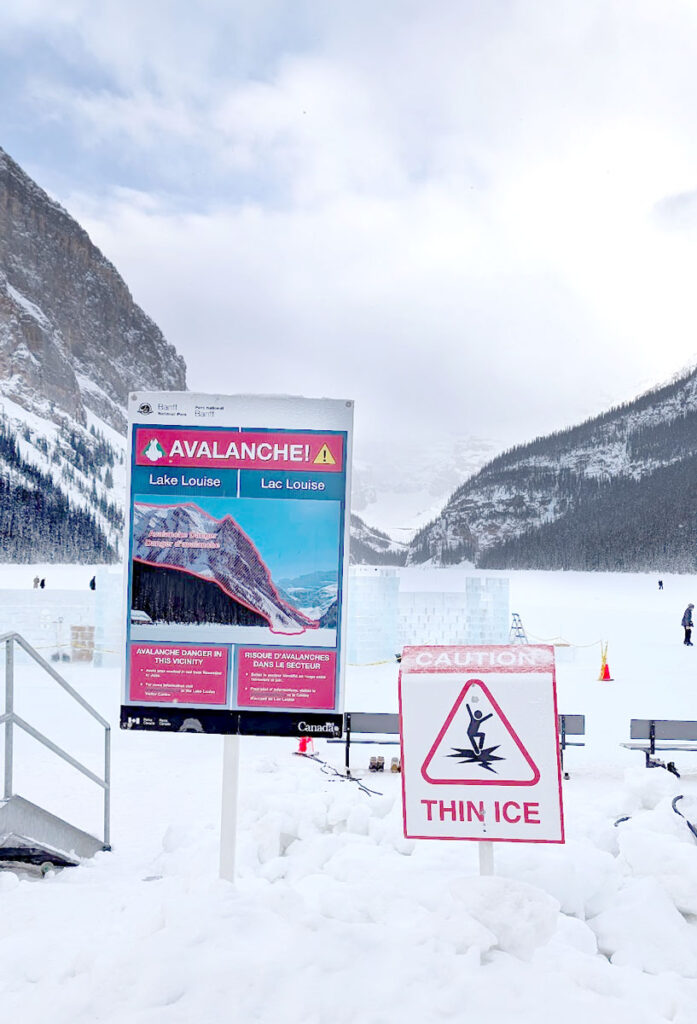
Avalanche season in Banff National Park is from November to June. And each trail has it’s own avalanche risk, so I recommend checking ahead of time which trails are safe. Here’s all the recommended winter hikes around Banff town and how to prepare for them.
If you’re heading to Lake Louise, this is a big avalanche territory, see the avalanche zones and safety requirements for Lake Louise. I originally wanted to do the Fairview Lookout but noticed it was pretty close to the avalanche territory so decided on the Lake Louise Lakeshore walk instead.
Read more: The Truth About Banff In June: Is It The Best Time To Visit?
2. Get a Winterized Rental Car
The Canadian Rockies in winter has their own microclimate because of the mountains, so the weather changes quickly and doesn’t follow typical weather patterns. So winter driving is less than desirable, especially in the mountains. The roads can be icy, visibility can be low, and clear conditions can change quickly for the worse. Seriously, on my drive from Lake Louise to Banff, the weather was perfect and clear until it wasn’t.
The highways are also maintained pretty often and are heavily driven on. But the bigger danger comes when you exit the highway, and turn on the side roads. I went on the Bow Valley Parkway to see Morant’s Curve and the driving conditions were less than optimal. The roads were barren with thick layers of ice. Even worse, there was black ice underneath- which can go completely undetected until it’s too late.
The moral of the story is that you want to be prepared for whatever might come your way, because it will happen fast. The best thing you can do is to have winter tires on your rental car. They make winter driving much safer and doable. They have different treads to be able to break better on the ice. This is especially important if you aren’t used to winter driving.
If you’re booking a trip between November and June, and renting a car, book winterized car rental. Although Alberta doesn’t have a legal requirement for winter tires, Banff National Park requires winter tires between November 1 and March 31 on specific mountain routes, like the Icefields Parkway (Highway 93N) and the Banff-Windermere Highway (Highway 93S).
Apparently, the winterized car rental does not come standard though because it’s not a requirement. Let’s just say, in Quebec it’s illegal to not have winter tires between December 1 and March 1. So you might have to e-mail your car rental company, and there may be an additional fee. I also recommend booking an SUV, which automatically has higher ground clearance, and usually has 4WD, both necessary for winter driving.
Also make sure to ask for snow removal gear, Enterprise gave us a very tiny snow brush, but at least we had one.
3. Icefields Parkway Might be Closed When You Visit
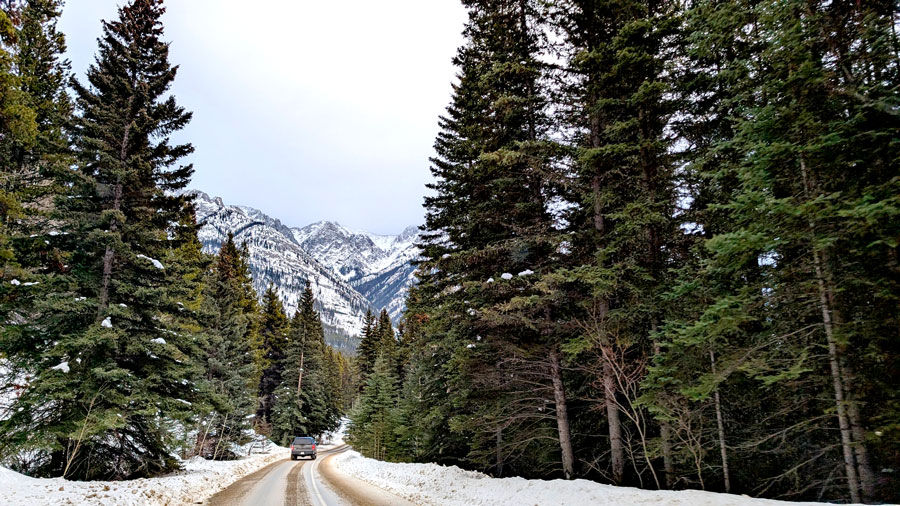
The Icefields Parkway is in avalanche territory. It’s also one of the two roads in Banff that require winter tires or tire chains between November and April. With that in mind, I would not plan a trip around the Icefields Parkway.
The worst case scenario is that there’s an avalanche while you’re driving on it, and you’re caught. If you’re lucky and miss the actual avalanche, it can close anywhere from a few hours to a few days or weeks to clear the snow. Parks Canada also causes some of the avalanches for safety reasons.
This can completely derail your trip if you were planning on driving the Icefields Parkway to get from Banff to Jasper. So don’t plan that. At most, you can have a tentative plan to drive it as a day trip from Lake Louise. This way, you can always change plans last minute based on whether or not it’s open. I have a full day itinerary along the Icefields Parkway from Lake Louise.
But in my mind it still isn’t worth the risk to drive on. It’s not exactly an easy drive in the summer, and the winter is even worse conditions. There’s also no gas or food stops along the way, or cell service. You can also arrive at your final destination just to be blocked getting back to Lake Louise.
Read more: How To Drive The Icefields Parkway & The Best Places To Stop
4. The Road to Moraine Lake is CLOSED!
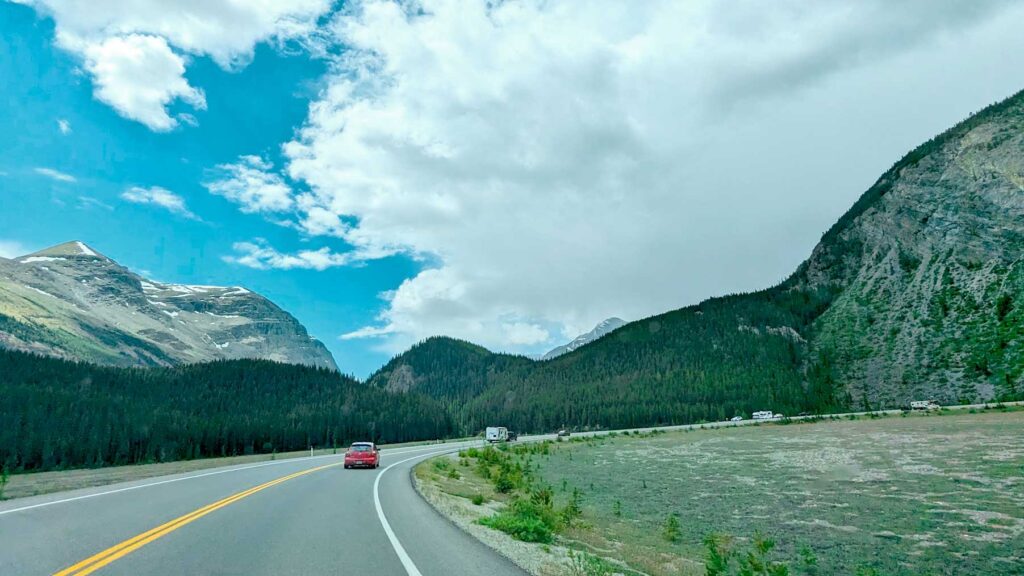
There’s not denying that one of the top things to see in Banff National Park is Moraine Lake. Unfortunately, you won’t be able to see it in the winter. The road is closed to shuttles and vehicles during the winter months (usually from October until June 1). Read more about accessing Moraine Lake on Parks Canada.
The road has ski tracks, but access to the lake is still off limits as this is dangerous avalanche back country. There’s also no cell service here, so you’ll be completely on your own.
Let’s just say, if Moraine Lake is on your bucket list for Banff National Park, then winter might not be the best time to visit.
Read more: Is Moraine Lake Worth It? The Ultimate Visitors Guide
5. Bring or Buy Crampons (Ice Cleats) for Winter Hikes and Walks
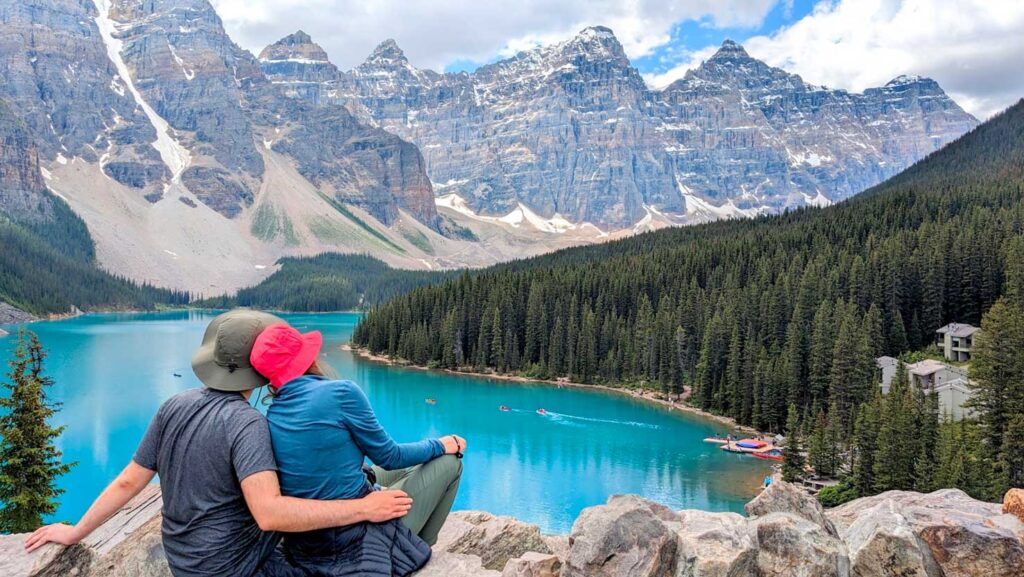
Even if you aren’t an intense hiker, and just plan on simple walks in Banff in the winter, wear crampons (ice cleats). Crampons are attachments for your boots that have small metal picks to help you walk on ice. These are a must have for any winter walk, no matter the elevation.
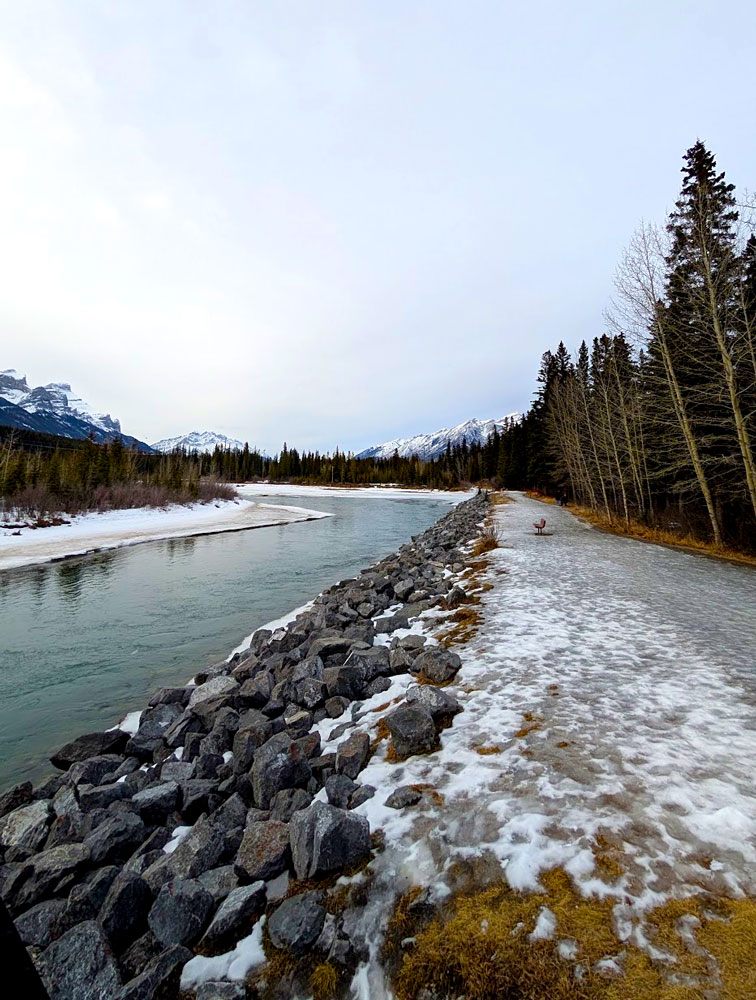
There were certain hikes that I couldn’t do because the recommendation was to wear crampons. But there were also simple walks that I had to turn around on because it was too icy (like the very flat Friendship trail along the Bow River in Canmore – p.s. see more things to do in Canmore).
You can either pack crampons in your checked luggage, or buy a pair when you arrive at one of the local shops. Or another option is to sign up for guided tours that provide crampons, like this ice walk tour of Johnston Canyon.
Pro Tip: Download my Banff National Park travel guide with a packing list, travel tips, and top things to do in Banff, Lake Louise and Canmore.
6. The Town is a Lot Quieter than the Summer
Okay, now that I’ve discussed some of the cons, here’s one of the perks of visiting Banff in winter – there’s way less people! Not only is winter a low season travel time, and Banff isn’t exactly a warm destination. But during the day, most of the tourists have gone to the ski hill.
Because I wasn’t skiing, it felt like I had the town to myself during the day. There was no issue getting lunch at restaurants, shopping was quieter, museums were empty, and I got photos without crowds!
So if you’re interested in touring Banff town, this is the optimal time to do that. See all my top things to do in Banff!
7. Don’t Expect Iconic Lake Views
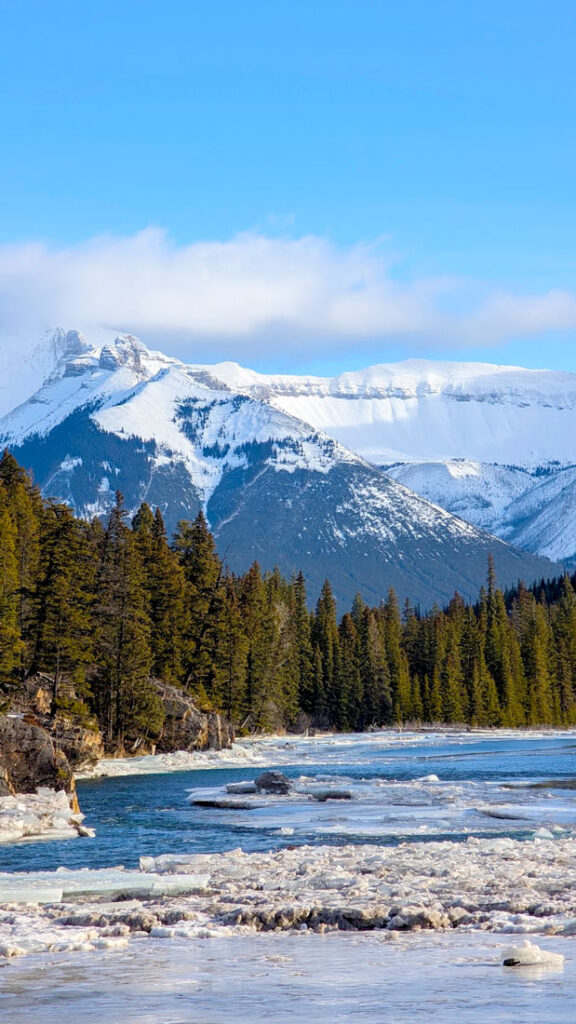
On the other hand, one of the main downsides to visiting Banff in winter is that you don’t get those iconic lake views. The teal blue lakes are so iconic for Banff National Park, but you just won’t see it in the winter. Not only are the lakes completely snow covered, but the colour comes from melted glacier water.
On top of missing out on the colour, you also can’t even tell there’s a lake because of the snow. There’s no contrast or reflection to your photos anymore. I was very happy that my first time visiting Banff I was able to see the blue lakes. So this time visiting in the winter, I didn’t miss them. Instead I was able to appreciate the snowy vibes. Because let’s be real, the snow vibes are still special to see nonetheless!
And you might still have the blue Bow River running through the park. Rivers don’t ice over the same way as the lakes.
Read more: Do You Need To Visit Lake Louise (& When Is The Best Time To Visit?)

8. But Don’t Expect a Winter Wonderland Either
So you can’t expect blue lakes, but you also can’t expect a winter wonderland in Banff in the winter either.
When I visited in late January, the weather was already warming up. It was beautiful winter weather though – much warmer than I expected and there was zero wind. But unfortunately, this also meant that there was barely any snow on the ground.
But the Canadian Rockies in winter is a magical place, and every area has it’s own micro-climate. So Banff can have completely different weather than Lake Louise in winter – we have the mountains to thank for that. So Lake Louise was actually the winter wonderland of my dreams. This also means that there’s no weather standard year over year.
Just be aware that winter in Banff is unpredictable to say the least. You might have the winter wonderland of your dreams, or you might have an icy hell, or a snow mush and mud!
If you want snow, your best bet is to visit in December. Year over year, it’s been the coldest month, and it warms up by February (which is beautiful). And no matter when you visit in the winter, you’ll have snow capped mountains, and those are always magical.
9. Sunrise is Late & Sunset is Early in the Winter
One of the best perks of visiting Banff in winter are for the later sunrises. Sunrise is much later in the winter than the summer months in Banff. The sunrise in the summer is as early has 5:00 A.M. whereas in the winter it’s closer to 9:30 A.M. This is perfect for having an easy morning and still being able to capture all those gorgeous sunrise views. Keep in mind, it will still be dark when you get up for the day, but I find that just adds to the coziness!
Sunset is also earlier in the winter than the summer. But at least this means it will at least be dark when you go to bed in the evening and get to see sunset. When you visit Banff in the summer, sunset can be as late as 10:00 PM – I needed an eye mask to fall asleep most nights. Whereas in the winter, sunset is around 5:30 P.M., a much more reasonable hour!
This is also important to note that your days will be much shorter with less daylight in the winter. This is important to keep in mind if you planning on doing a lot of day trips with driving. You don’t want to be driving back in the dark, especially in the winter with potentially dangerous road conditions.
See the times for sunrise and sunset in Banff.

10. Winter Activities in Banff take over the Summer Activities
Obviously, you can’t do the same activities in Banff all year round. So you will have a new set of winter activities to enjoy that you can’t do in the warmer summer months. These make it a completely new experience!
Of course, you can still go hiking, but now there are other things to do in Banff Canada in winter, like skating, skiing, snowboarding, tubing, snowshoeing, cross country skiing, even glacier walking…
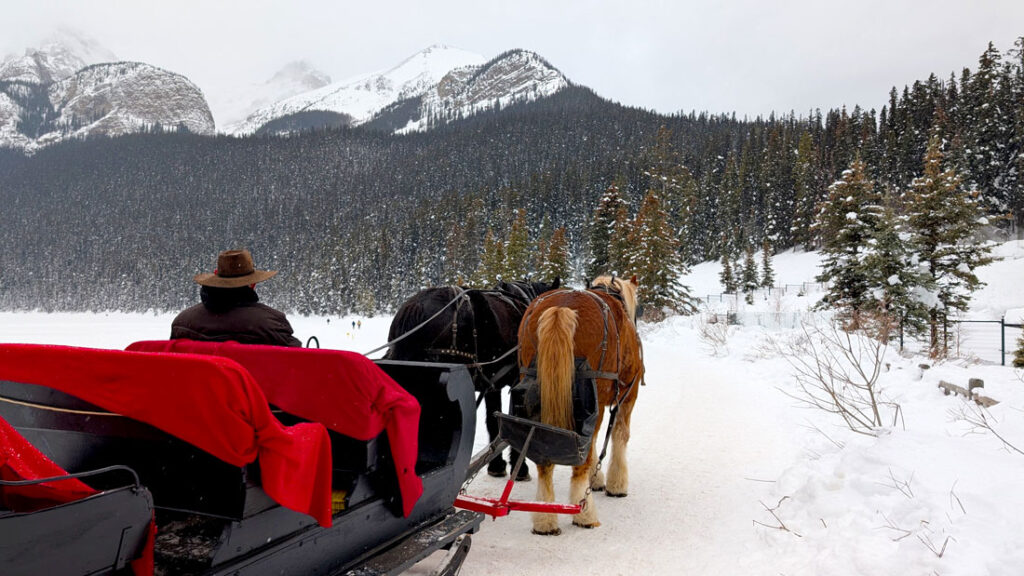
There are three main ski hills in Banff National Park: Banff Sunshine Village, Mt. Norquay Ski Hill, and the Lake Louise Ski Resort. There’s also skating, cross country skiing and sleigh rides at Lake Louise. And tubing is at Mt. Norquay Ski Hill.
With the addition of the new winter activities in Banff, some other attractions are closed. You won’t be able to visit the hot springs, maybe the Icefields Parkway, and Banff National Historic Site Museum. Some of these are due to weather restrictions, while others are due to low season and less tourists.
P.S. Sign up for a guided ice walk of Johnson Canyon, that includes crampons (ice cleats), and hot chocolate!).
Banff SnowDays Festival
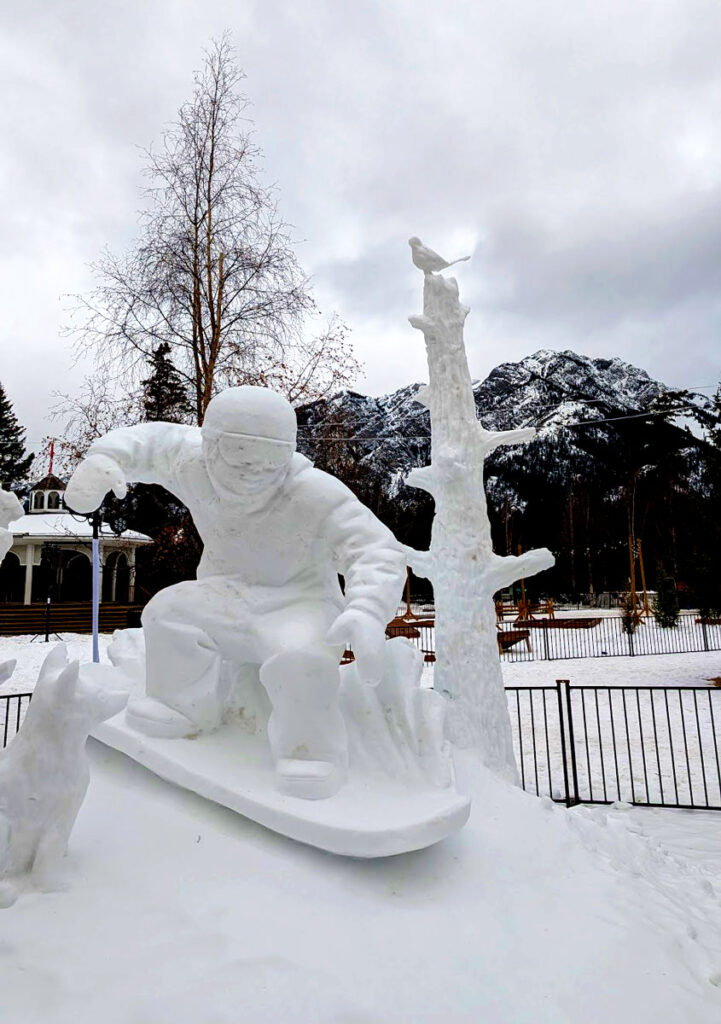
But above all, my favourite winter addition is the SnowDays festival in Banff. This is their annual winter festival with even more snow activities and events. The festival runs the last few weeks of January into the first week February.
They have ice and snow sculptures throughout town, food trucks, and my favourite – the hot chocolate trail. I may have had a tad too many hot chocolates when I visited, if that’s even possible!
My Winter Travel Essentials
There are a few essentials I always pack when traveling in the winter. You always need a good warm jacket, that also isn’t too bulky. I love my North Face Women’s Down jacket (they don’t sell the exact model anymore, but the Aconcagua Parka is very similar!). Underneath I usually wear a merino wool sweater so it’s thin to pack but keeps me extra warm.
Depending on the how cold my destination is, a pair of thin wool socks also come in handy to keep my feet warmer. And if I need extra heat, these hand and feet warmers can be a life saver when you’re spending long amounts of time outside. For safety, if you are spending time walking outside, pack some crampons in case it’s icy.
Where to Stay in Banff National Park
You have to book your hotels EARLY in Banff. We booked the Buffalo Mountain Lodge for June back in February… and most hotels were already fully booked at that point.
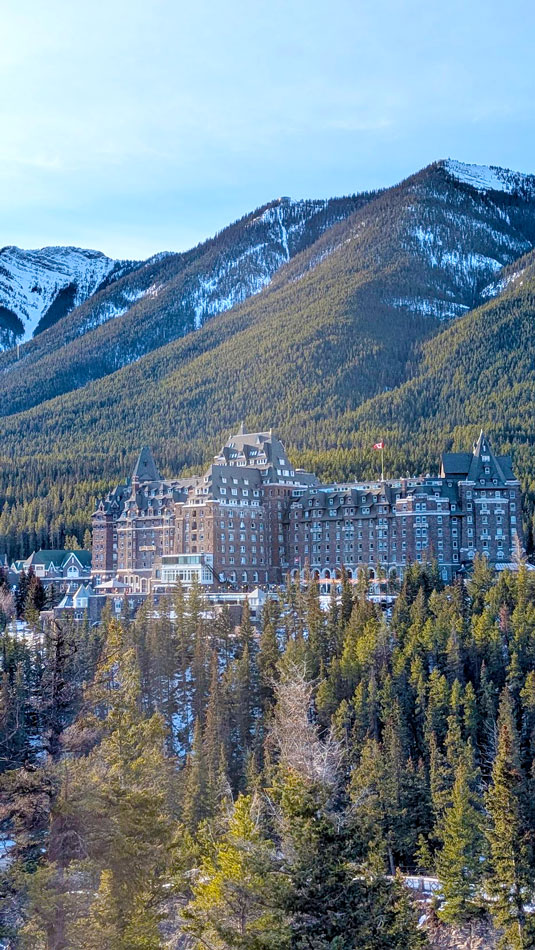
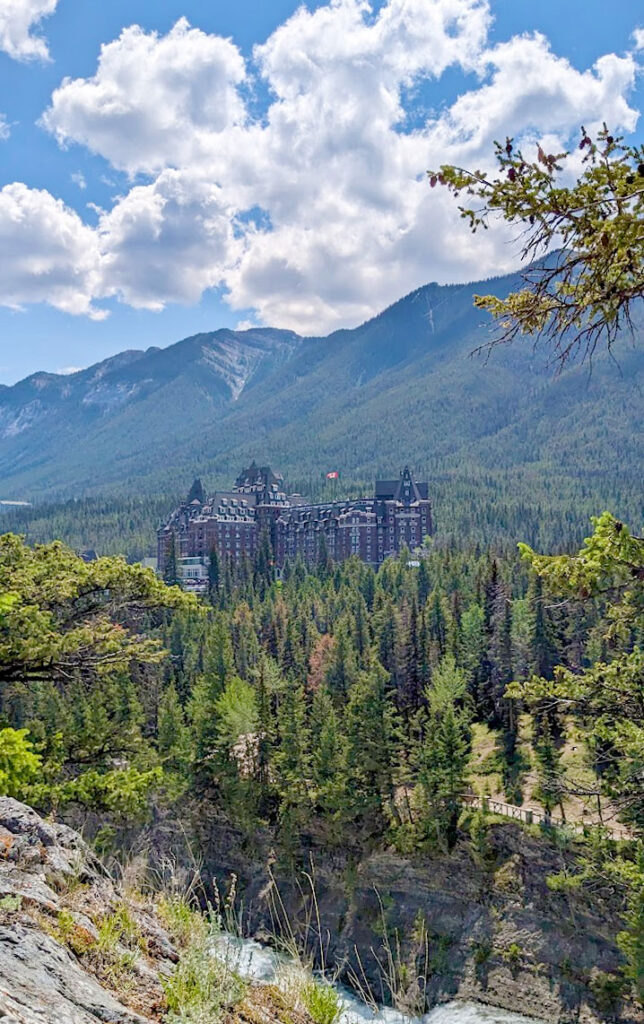
The place to stay is at the Fairmont Banff Springs Hotel – but that will cost you. We opted to just visit the Banff Springs instead, but you can check rates and availability on Booking.com.
We stayed at the much more affordable Buffalo Mountain Lodge. They have some renovated rooms, which I recommend booking. It was more of a resort hotel, with a cozy room and balcony to enjoy! Breakfast is also included which is a great way to start the day of hiking! It is a 15 minute walk to the town of Banff though. Check availability and room rates on Booking.com.
If you’re looking for a more reasonable priced hotel, in the town of Banff, we really wanted to book the Mount Royal Hotel (see it on Booking.com). Although the rooms are a lot smaller, there’s a fun jacuzzi on the roof, and you cannot beat the location on Banff Avenue – you can’t get a better location than that! Check availability and room rates on Booking.com.
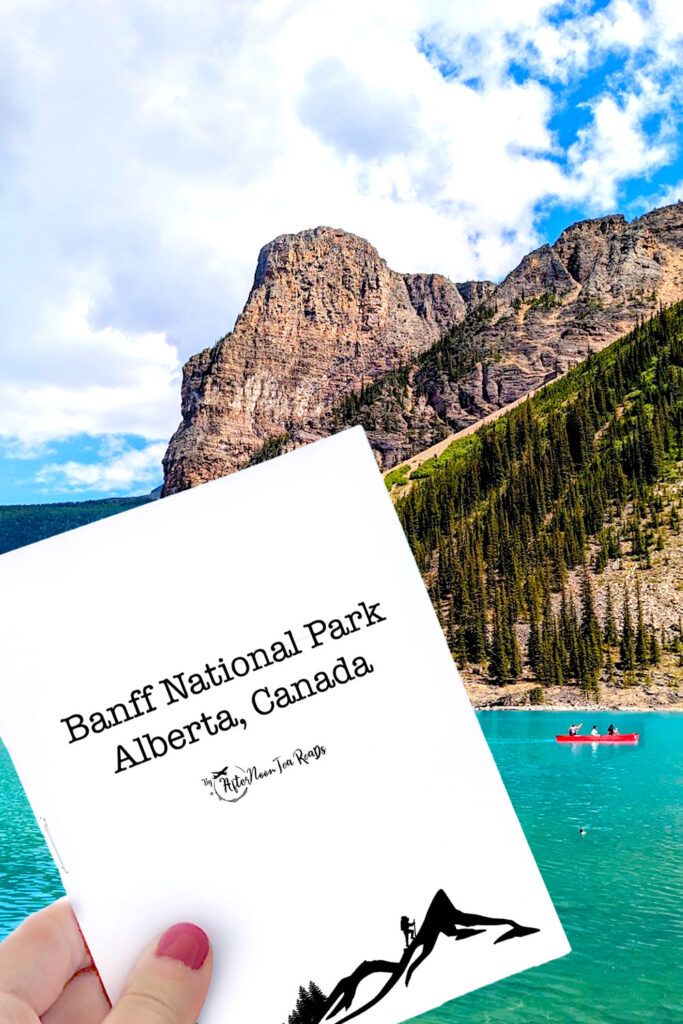
Banff Travel Guide
Use it digitally on your phone to check off top attractions as you do them. Or print it out in one of three size formats.
9 Pages included:
- Cover page
- Banff at a Glance: with tips for travelling to Banff National Park
- Packing Guide (summer & winter)
- Things to do on the way to Banff (Canmore)
- Things to do in Calgary
- Banff National Park checklist
- Souvenirs to Buy
- Additional notes
Read More Related Posts
- 15 Banff Souvenirs that Capture the Canadian Rockies Spirit
- Guide To The Banff Gondola (Is It Worth The High Cost?)
- The Truth About Banff In June: Is It The Best Time To Visit?
Click Image To Share Or Save This Post