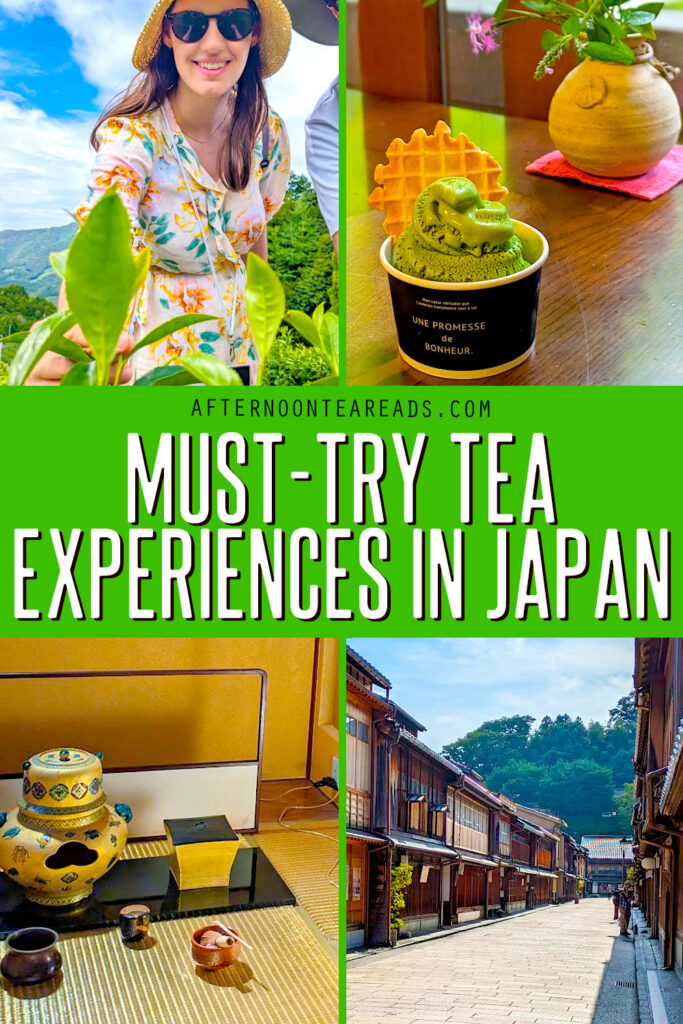
Tea In Japan: 10 Best Experiences For Tea Lovers
Tea in Japan is a huge part of the countries history and even culture today. So it was a no brainer that on my first trip I wanted to dive into as much of tea in Japan as possible. Especially if you’re a tea lover like myself, these are the top things to do as a tea lover visiting Japan.
Psst! This blog post contains affiliate links in it which sends me a bit of extra money if you use them… at no extra cost to you!

Top 10 Tea Experiences in Japan
There are so many top things to do your first time in Japan, but these are the best ones for tea lovers to experience!
P.S. Planning your first trip to Japan? Stay organized with my printable Japan travel guide, with a packing list, two-week itinerary, and checklists for all the top things to do!
1. Tour A Historic Tea District
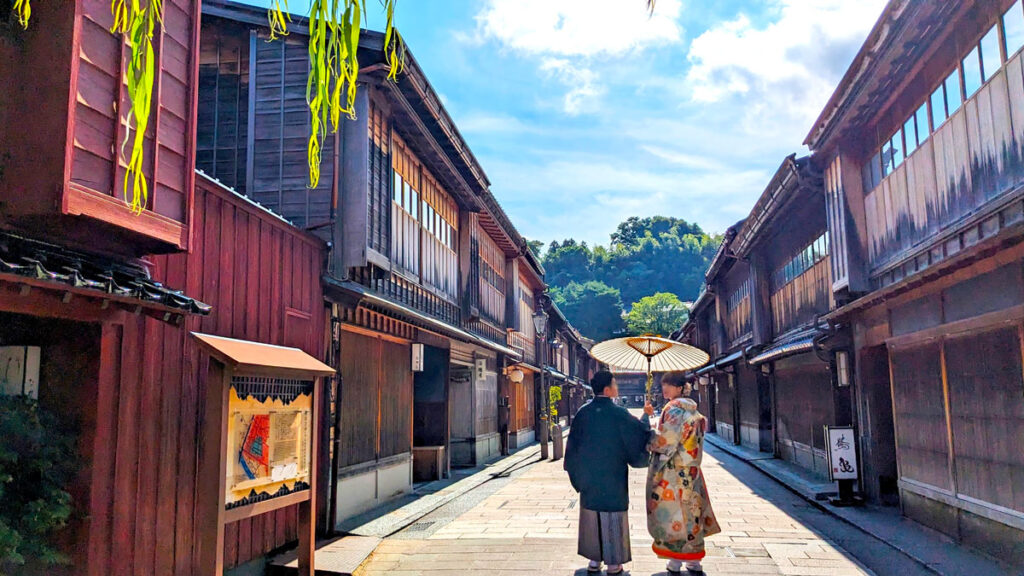
There are two prominent historic tea districts in Japan: Gion in Kyoto and Higashi Chaya in Kanazawa. They are well preserved areas from the feudal period in Japan when teahouses and geishas were very popular.
I highly recommend booking a walking tour through one of these districts to gain more background information on the historic aspect of the teahouses and the role of geisha’s in Japan (you might not have known how connected they are!). In fact, a huge part of a geisha’s job is serving clients tea during a traditional tea ceremony.
I also recommend booking a meeting with a Geisha to go inside a more modern teahouse and experience a bit of what would happen inside in feudal Japan (and still does today!). I booked a Gion walking tour with a Geisha meeting all in one. It was neat to be able to ask them questions about their profession during this meeting as well!
2. Visit a Traditional Teahouse (Ochaya)
As I mentioned, Gion and the Higashi Chaya historic neighbourhoods are both home to historic teahouses, known as Ochayas. A teahouse is where guests were entertainment by geishas and served matcha. Now that you’ve toured the outside area, and maybe experienced meeting a geisha inside a modern teahouse, it’s time to go inside a traditional teahouse!
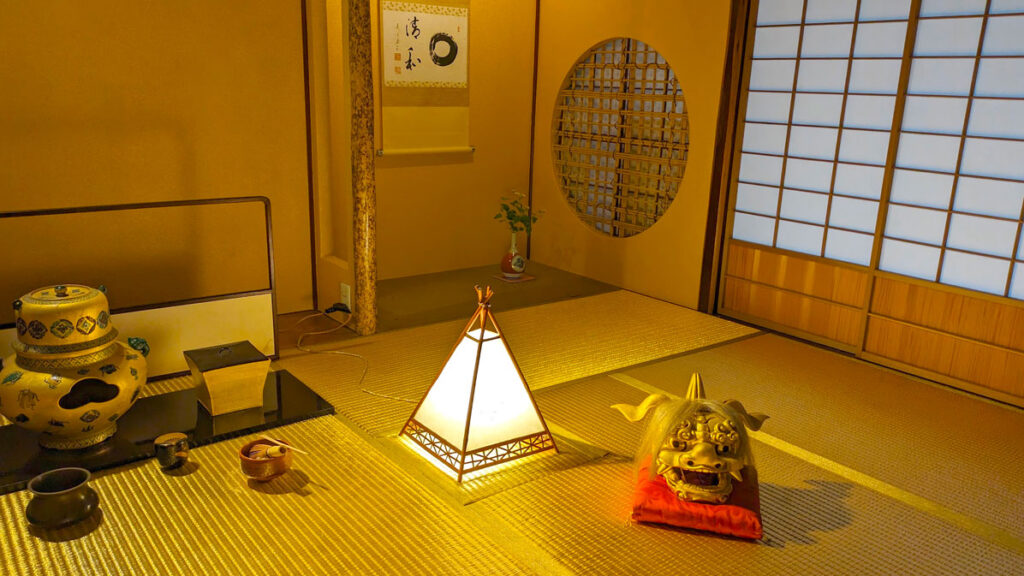
There are two centuries old teahouses you can tour in Kanazawa Japan: Geisha House Shima, and Kaikaro. You’ll see where the matcha ceremony took place in the house, and learn more about the ceremonies and hosting guests. I toured Kaikaro in Kanazawa Japan and would highly recommend it!
Did you know: Going to a teahouse is a centuries old tradition in Japan that actually still exists today. Teahouses still employ geishas and host clients, although you won’t be able to find yourself in a modern one. They are invite only, so you have to know someone in the inner circle in Japan to get inside.
3. Take Part in a Traditional Matcha Ceremony
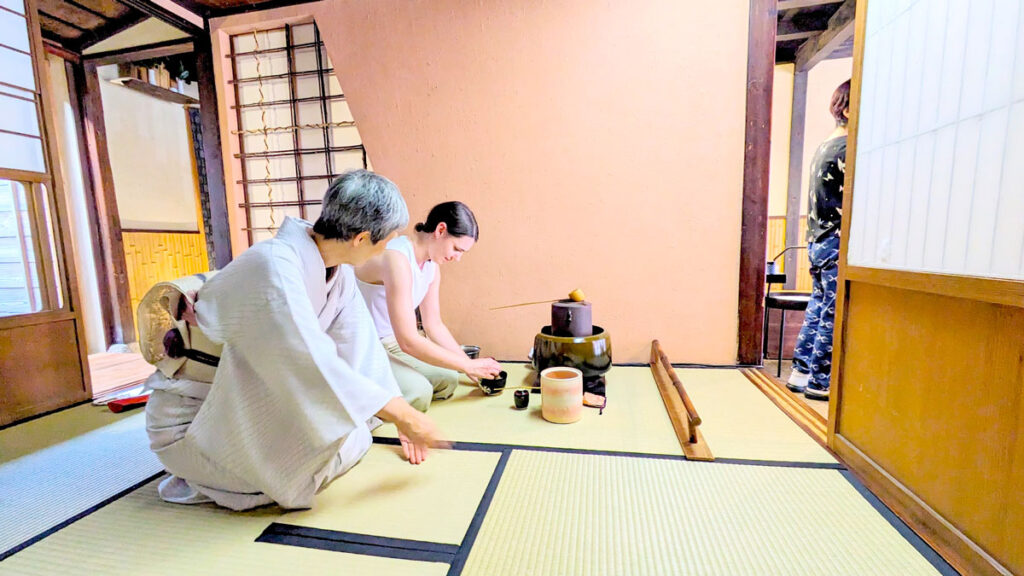
And finally, the final piece of the teahouse experience is actually taking part in a traditional matcha ceremony in Japan. You want to be served matcha in a chawan, and learn how to make it yourself. This will not be your typical matcha latte you might be used to.
The only problem with matcha tea ceremonies is how many there are in Japan. It can be a tad overwhelming. So for all my extreme matcha tea lovers visiting Japan, I found that stood out above the others… SOYU matcha ceremony in Kanazawa Japan.
This ceremony felt a lot more authentic than the others because it offered something no other matcha tea ceremony did: serving two types of matcha: koi-cha and Usu-cha. Koi-cha is a thick matcha, which is more like a paste, and it’s made by your host in a more serious manner.
The second matcha, known as Usu-cha, it what you’ve probably seen at other matcha ceremonies. It’s a lot lighter, and has a lot of bubbles on top. During this part of the ceremony, you’re even offered the chance to whisk it for another guest, creating as many bubbles as possible. The windows are opened in the room to add in light and more fun to this part of the ceremony.
I really enjoyed my matcha ceremony in Kanazawa from SOYU, even though communication in English was a bit of a struggle. Google translate did come in handy quite a bit. It felt a lot more authentic though not having them speak English, and I didn’t dress up in a kimono for the occasion which always makes it feel overly touristy.
The key is to find a matcha ceremony that offers both these types of matchas so you can taste the difference.
Where is Kanazawa Japan? Kanazawa Japan is an easy day trip from Kyoto, or you can also opt to stay one night (I stayed at Hotel Kanazawa Zoushi). I do think it’s worth visiting, especially for tea fans – read my full post on visiting Kanazawa.
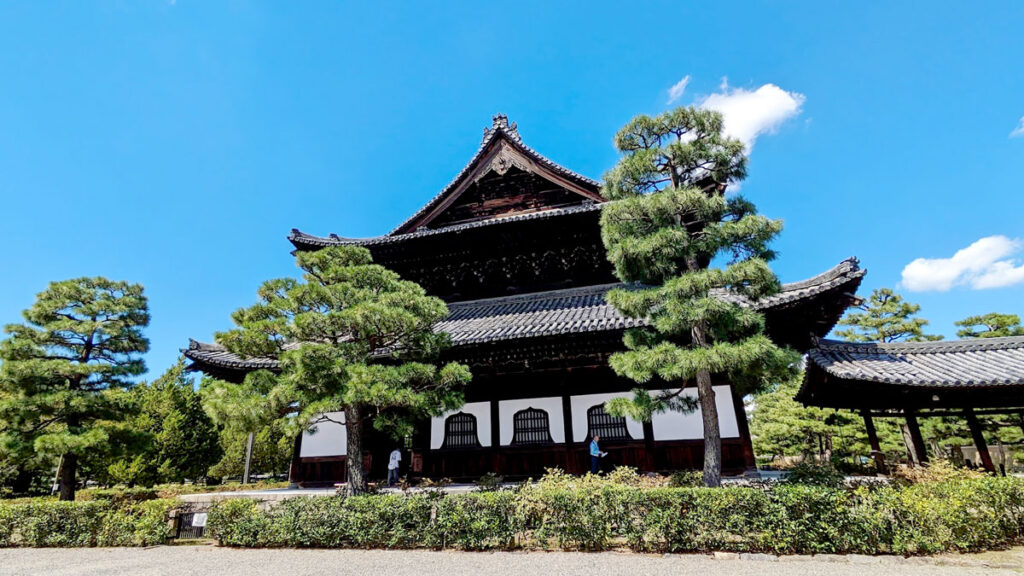
4. See the Tea Bushes at Kennin-Ji Temple
Zen Master Myoan Eisai, founder of Kennin-ji Temple in Kyoto, is also believed to be the father of tea in Japan. He went to China and brought back tea seeds in 1200. Although tea had already existed in Japan before this, he cultivated the bushes and popularized the practice of drinking tea. Matcha became a huge part of Buddhism in Japan as a way to clear your mind.
If you’re in Kyoto, walk through the temple grounds and try and spot the Camelia sinsensis tea bushes that line your path. You can also pay to visit the temple, where they have a tea garden and tea room.
The Heisei Tea Garden is a more official garden of tea bushes. The bushes were planted in 1991 to commemorate 800 years of tea in Japan. The best part though? The bushes are still plucked every May to make tea!
And if you’re lucky enough to be visiting on April 20, every year they host a memorial service for Zen Master Eisai. It’s an entire day of tea ceremonies. You do have to make a reservation in advance.
5. Visit a Tea Farm (Obubu Farm Tour)
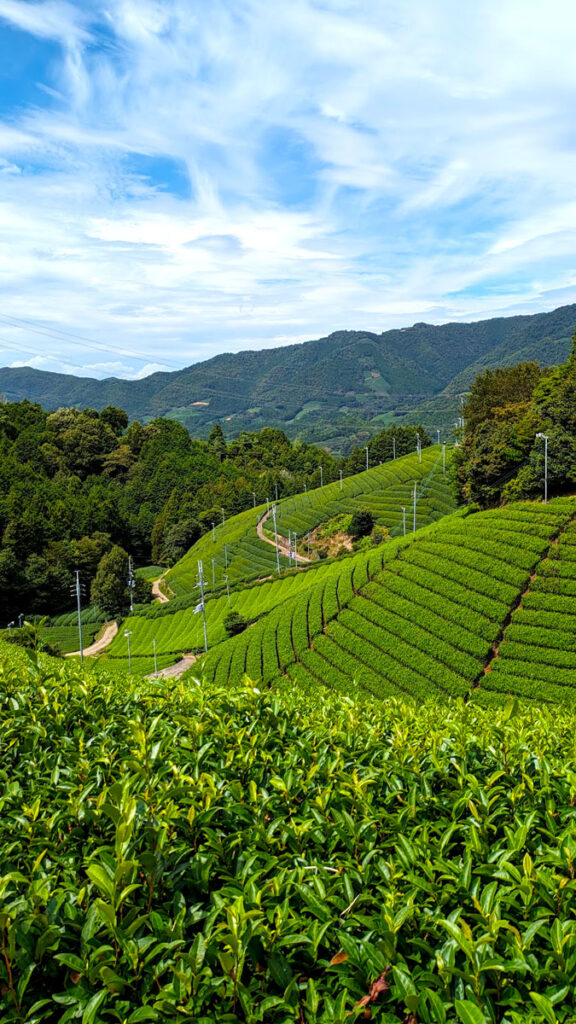
A highlight of my trip and discovering more tea in Japan was my day trip from Kyoto to Obubu tea farms. Obubu Tea farms is in Wazuka Japan which is home to hundreds of tea fields. It was a dream driving through the rolling tea field hills.
But the tour at Obubu tea farms did not disappoint either and is a must do for any tea enthusiast visiting Japan. I learned so much more than I could have imagine about Japanese tea. We went into the tea fields, where I plucked a leaf directly from a bush (and ate it!). Then we saw the factory where the leaves are processed. And tried every different type of tea, and even tried different methods for brewing it too!
If you’re a real tea fanatic there really is no better tea activity in Japan.
Pro Tip: the main downside was that it was complicated to get to the Obubu farm but now they offer a shuttle from two train stations (so I recommend booking transportation with them!).
6. Tour a Matcha Factory
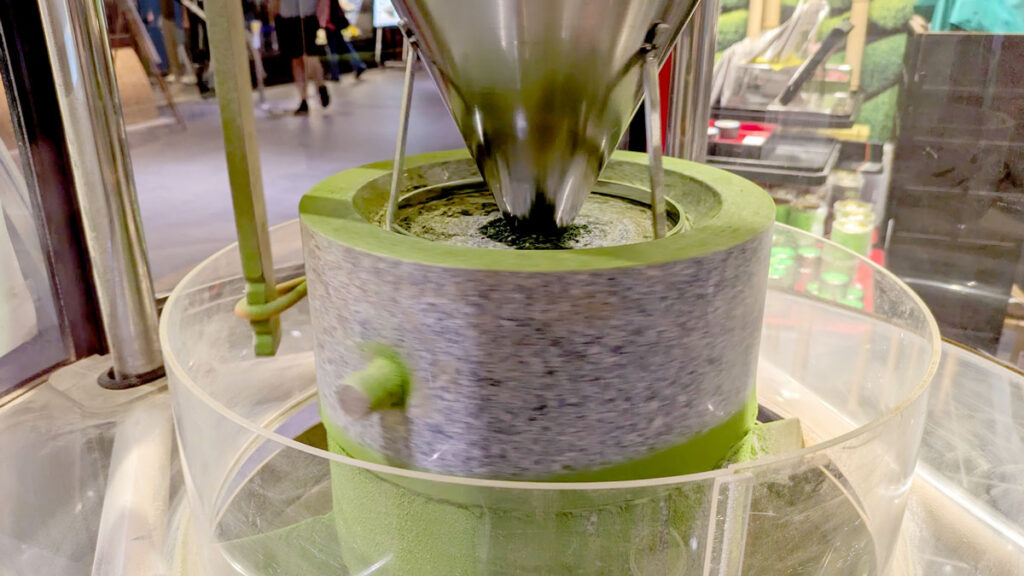
Uji is the land of matcha, and it’s conveniently a very easy day trip from Kyoto, just one train ride away. They have one of the most unique tea activities in Japan – touring a matcha factory.
Marukyu Koyamaen Factory invites you into their working matcha factory. You will not only learn everything there is to know about matcha tea in Japan, but you will see how it’s made in real time. And of course, you will attempt to make your own bowl of matcha.
This tea activity in Japan does take a bit of advanced planning though. You need to make a reservation at least 7 days in advance, and they have a lot of blackout dates (like peak season and weekends). So with all these constraints, unfortunately, I wasn’t able to visit. But hopefully you’re reading this with more than enough time to plan accordingly!
If you aren’t able to book the tour at Marukyu Koyamaen Factory, you can book this tour on Viator instead. It includes a walking tour of Uji where you’ll learn more about the history of tea in the city, and you’ll get to grind your own matcha powder.
7. Enjoy All the Bottled Tea You Can Find
You have to drink tea in Japan, as much as humanly possible! And they make it pretty easy for you to do. One of my favourite things about Japan, that I genuinely really miss, was the easy access to bottled iced tea.
And I know what you’re thinking, we have iced tea in North America. And you’re not wrong. But it’s also so far from being the same thing. The iced tea options in North America are limited to black and green tea with added flavouring. And you can’t forget about the obscene amount of added sugar in every bottle.
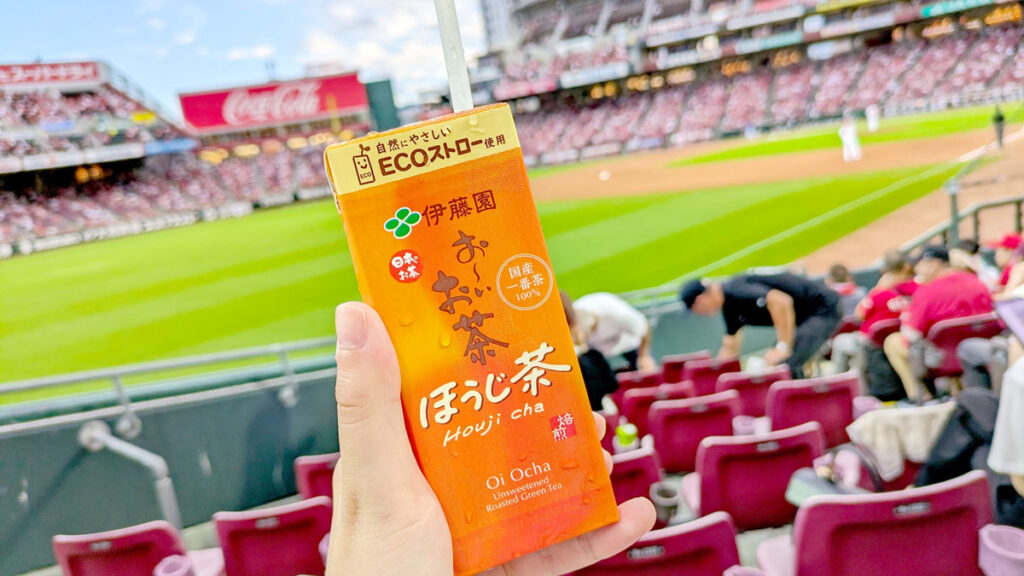
In Japan, you’re able to find unsweetened iced tea in SO MANY tea flavours. The flavours didn’t stop at black and green tea. You could choose from hojicha to rooibos to jasmine and more! And the iced tea isn’t limited to bottles in Japan either. I was even able to get a hojicha juice box… if you can still call it a juice box if it’s not actually juice!?
P.S. See all the different types of Japanese green tea!
Easy access to bottled tea was also astonishing in Japan. They had vending machines where you would least expect them – but they were always VERY welcomed to see. I was hiking up the Fushimi Inari shrine, and at the top was a vending machine. And along the Philosopher’s path in Kyoto, there was a vending machine. This way you never really had to rely on going out to find a shop or corner store.
Another cool factor was the 7/ Eleven also had a section of bottled hot tea. It’s like the refrigerated section, but instead of keeping your drinks cold, they were keeping them warm. And that was always filled with even more tea options. I didn’t try any as I was always melting in the hot summer weather, but I imagine these are very nice when visiting in the colder months.
8. Enjoy Bottomless Tea in Japan At Conveyer Belt Sushi
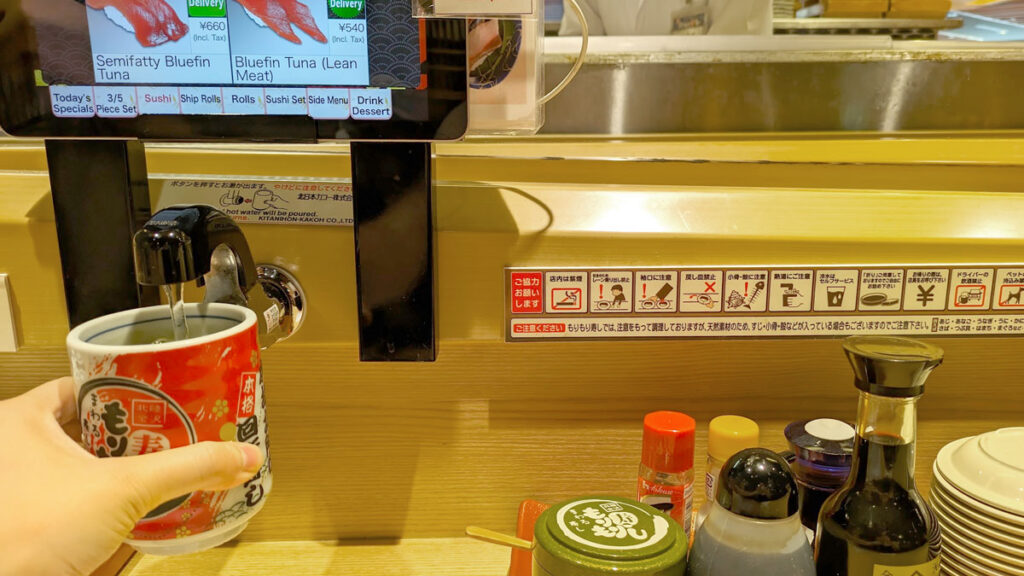
Most people go for conveyer belt sushi for quick access to good quality sushi in Japan, and the intrigue. I, on the other hand, went for the bottomless tea – it was incredible! So while my partner enjoyed grabbing plates of sushi as they passed him, I was busy filling up my tea cup with hot water for more tea.
Each seat at the bar came with their own supply of powdered tea and hot water dispenser. There was never any waiting for a staff member to ever bring you more water or even more tea if you wanted.
I was never sure what type of tea it was, but it was usually a dark green powder. I would be surprised if it was matcha, so my suspicion was that it was powdered genmaicha… which brings me to my next way to drink tea in Japan…
9. Try Other Tea Powders
Matcha is a powdered green tea that has become a worldwide phenomenon. And although there are lot more options for matcha tea in Japan, you should also seek out some other green tea powders that you won’t be able to find back home.
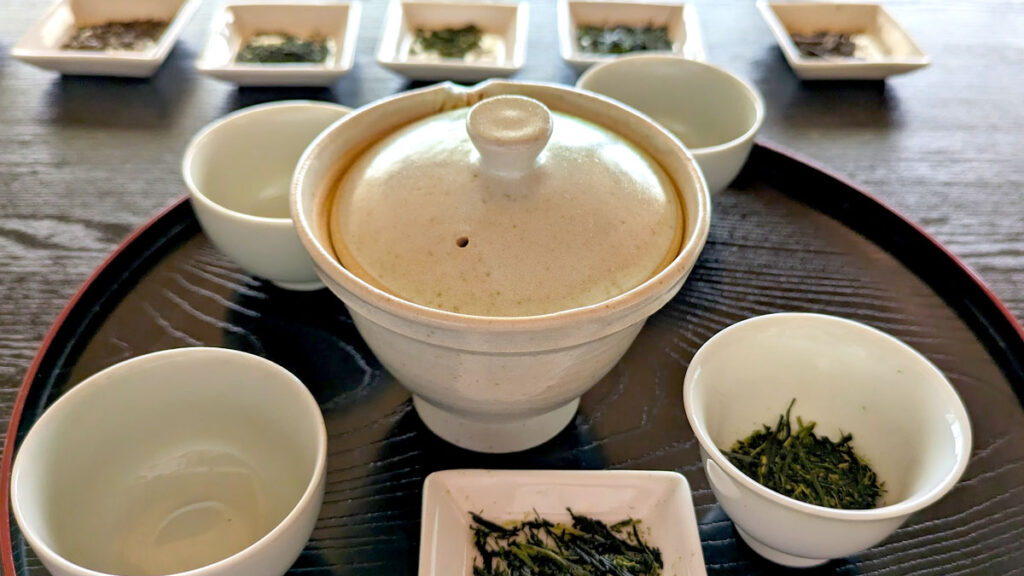
I had no idea before my visit that other types of teas could be made into a powder just like matcha. In Japan I saw both genmiacha powder and hojica powder. And I actually found I enjoy powdered genmaicha better than regular genmiacha. It felt more whole bodied and I love the mouthfeel of the tea.
And just like matcha, these powdered teas can be enjoyed as tea, or used for cooking. I even once had it sprinkled on top of my meal as a dusting of genmaicha powder on seaweed, which was delicious!
When you’re in Japan, you really want to branch out to other types of Japanese teas!
10. Try All the Tea Flavoured Foods You Can Find
Tea in Japan is so popular, but not just as a drink. It’s also broken into the culinary world (this is also thanks to powdered teas!). A love for the flavour of tea has opened up an entire culinary world of tea snacks, desserts, and even other drinks.
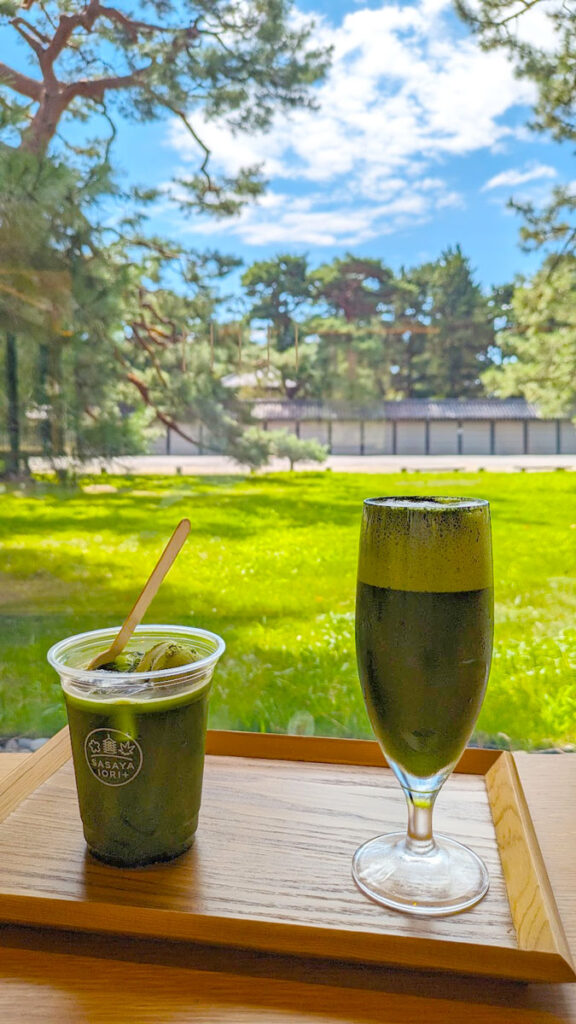
I swear, there was always a matcha flavour on the menu – for whatever you were looking for. And when it’s there, I urge you to try it! From matcha ice cream, to shave ice (which is always a must try in Japan!), and I even tried matcha beer!
And although I wouldn’t necessarily recommend everything I tried, it was still always worth trying. I mean where else can you find a matcha beer!?
You might also be interested in: Finding The Best Matcha Green Tea Snacks You’ll Want To Try
Bonus! Find a Tea Exhibit at a Museum
I went to the Tokyo National Museum where one of their exhibits at the time was on historic tea vessels. This gave a different look at Japanese and tea history by actually seeing the age old artifacts. You can see how tea vessels changed (or didn’t change) throughout the centuries. Unfortunately, the Tokyo National Museum is always changing their exhibits, so be sure to check before you visit.
You can also check out the Kyoto National Museum, they also had a tea exhibit when I was visiting.
Don’t Forget To Bring Back the Best Japanese Tea Souvenirs
You’ll want to bring back some authentic Japanese tea souvenirs. Not only to remember your trip by, but also so you can bring home some of those traditional practices (and wow your friends and family!).
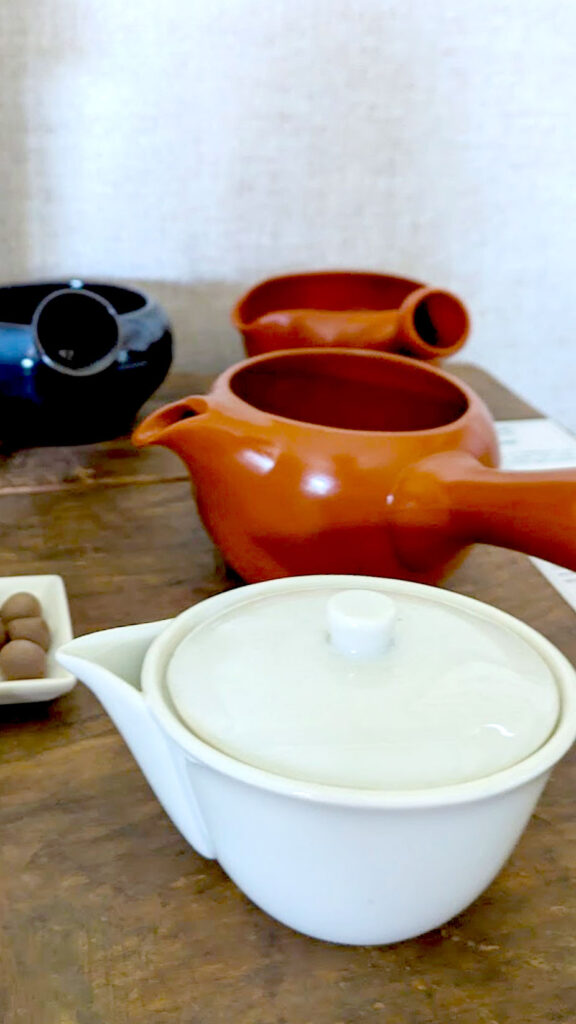
There are not one, not two, not even three, but four types of Japanese teapots. You can bring back a traditional chawan (bowl) and chasen (whisk) to make traditional matcha. Or to steep tea leaves, I recommend either a Shiboridashi or a Kyūsu, which are harder to find in North America.
A Shiboridashi is the hardest Japanese tea vessel to find. It’s very similar to a Chinese Gaiwan but bigger. There’s no handle for easy pouring, so you’ll have to learn how to properly use it without spilling or burning your fingers.
A Kyūsu is a teapot with a twist… the handle is on the side, next to the spout. This will be easier to use, and still looks beautiful.
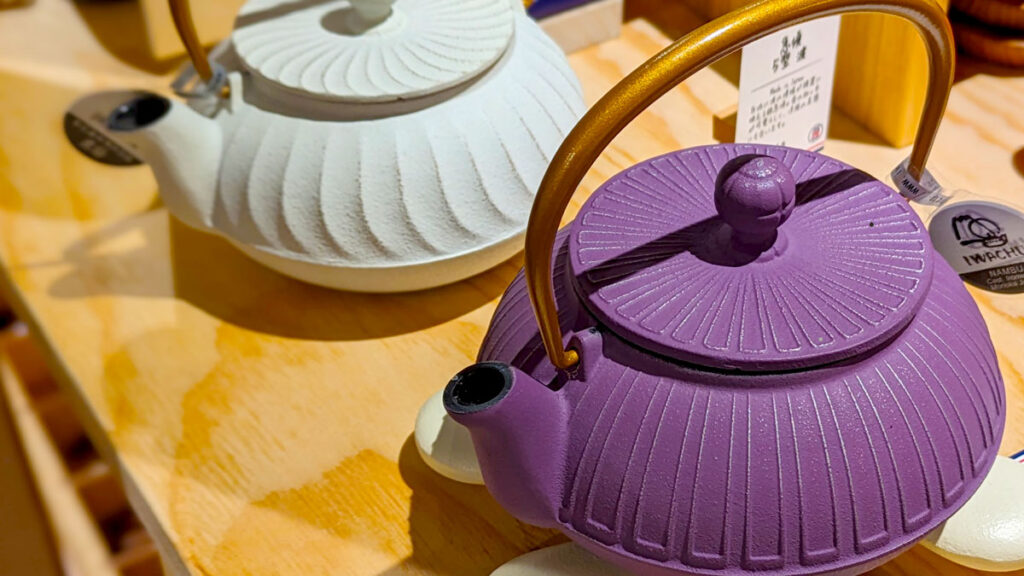
You can also opt for a tetsubin, a beautifully crafted cast iron Japanese teapot. It’s made of iron instead of clay, which is said to flavour the boiling water. I do find these are more popular to find back in in North America though.
And of course, you should still bring back tea. But if you bring back a Japanese teapot as well, you’ll always have something long after your Japanese tea stash is done! Focus on buying the Japanese tea that you might not be able to find back home either, like kukicha, hojicha, and wakucha.
Read also: 20 Practical Souvenirs From Japan You’ll Actually Use At Home
Need A Place To Stay to Explore Tea in Japan?
Here are some hotel recommendations to explore the best of tea in Japan for your upcoming trip.
Explore Tea In Kyoto: Hotel Recommendations
Kyoto is an ideal place to stay for exploring tea in Japan. You can go on a day trip to Kanazawa, Wazuka, and Uji to explore tea fields, tea history, and matcah factories. I stayed at the Rinn Gion Yasaka, in Gion. It was the perfect mix of modern and Japanese style hotel.
The location was a hit or miss though. Being so close to Gion, we were able to enjoy it without any tourists in the mornings and evenings. But, staying in Gion also meant that we weren’t directly on a train or subway line. There were a few bus stops near our hotel though. Check it out on Booking.com.
For Japanese and Tea History: Stay in Kanazawa
As I mentioned, you can also opt to stay one night in Kanazawa, which is what I did. There is more than enough to explore throughout one day in the city. I stayed at Hotel Kanazawa Zoushi which was a middle ground to the train station and things to see. See room rates and availability on Booking.com.
Japan Travel Guide

Use it digitally on your phone to check off top attractions as you do them. Or print it out in one of three size formats.
17 pages including:
- Japan at a Glance: with tips for travelling to Japan, iconic experiences, and cities to visit
- Packing list for Japan
- Two week itinerary map (graphic)
- City checklists for: Kanazawa, Kyoto, Osaka, Hiroshima & Tokyo
- Day trip ideas from Tokyo & Kyoto
- Souvenirs to buy in Japan checklist!
- Popular food to try in Japan checklist (with iconic food experiences, desserts & tea)
- Additional notes, to write travel info or favourite memories you don’t want to forget!
Read More Related Posts
- Popular Things NOT To Do In Japan Your First Time (& What To Do Instead!)
- English In Japan: A Useful Guide For First Timers
- Unbeatable 2 Week Itinerary In Japan For First Timers
Click Image To Share Or Save This Post