How To Make Matcha Actually Taste Good (5 Tips That Aren’t Added Sugar!)
Matcha is a wonderful tea to enjoy without any added sugar, you just have to know how to make matcha properly at home. Over many, many years of drinking matcha, and even going to Japan, I’ve learned a few tricks to be able to enjoy this tea without adding any sweeteners.
Psst! This blog post contains affiliate links in it which sends me a bit of extra money if you use them… at no extra cost to you!

How To Make Matcha Taste Good
If made properly, you shouldn’t have to add any sugar to enjoy matcha. And yes, even though they’re natural sweeteners, honey, agave, and maple syrup still count as added sugars in your daily diet. So here are my tips for how to make healthy matcha at home that actually tastes good…
Read more: What Is Matcha Tea? How To Make It, Benefits & More
1. Use Good Quality Matcha (But Not Ceremonial)
Before you try any of these healthy matcha making tricks, you need to start off with a good base. What I mean, is that you have to find a matcha powder you like. I find there’s often sweet spot in matcha quality and price.
For example, you don’t beed to break the bank buying the best and most pure ceremonial grade matcha. I can’t appreciate the delicate and intricate flavours, and I find they often taste too grassy and earthy for my liking.
But you also don’t want to buy the lowest grade matcha, which is called culinary grade matcha. This will be much more bitter, and flat tasting. Culinary grade is meant to be used in cooking and baking so the matcha flavour doesn’t get lost. But when used in a drink, the flavours are way too strong and bitter.
Read more: Comparing Grades of Matcha: Culinary And Ceremonial Powder

You want to find a matcha powder somewhere in the middle. There’s actually an entire spectrum of matcha quality. So finding one you like might take a bit of time, but it will be worth it once you do. You can find the right matcha by looking at three factors: the price, colour, and the description of what it should be used for.
The price is an easy first indicator of the quality of the matcha powder, start with one that is somewhere in the middle. The most expensive will be ceremonial grade, and the cheapest will be culinary.
Next, if you’re able to see the colour of the powder, this is a huge indicator of quality. The greener the powder, the better the flavours. But unfortunately, you might only be able to see the colour after you buy and open the package.
So before you buy it, read the packaging and see how they say this matcha powder should be used. If it says for cooking and lattes only, that is most likely not good enough quality to be enjoyed on it’s own. I like buying Izu Premium Matcha from Tealyra (also sold on Amazon) because it’s a reasonable price (but not the cheapest on their site!). I also like how the description says: “high quality daily matcha”. They say it can be used for both traditional matcha AND in cooking recipes.
Pro Tip: You also want to keep you matcha as fresh as possible. Once the air touches the matcha, it will begin to oxidize and loose its freshness and even bright flavour. To do this, you want to avoid buying large quantities of matcha all at once. You can alternatively try to transfer your matcha to an air tight container as well.
2. Sift Your Matcha
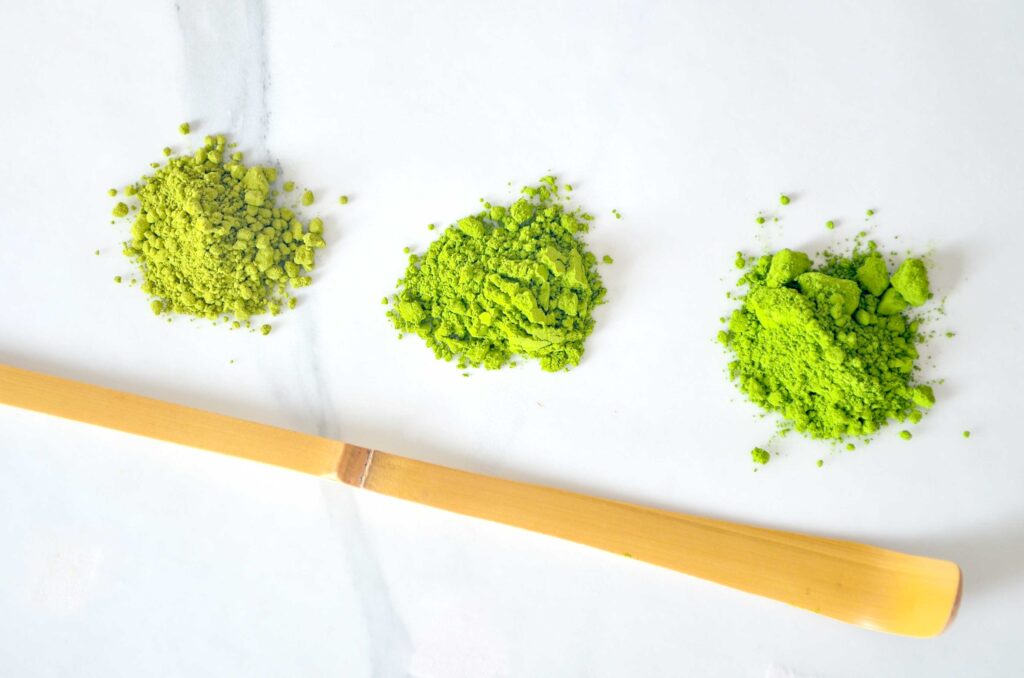
Now that you have a good base for your healthy matcha tea, the next step for how to make matcha taste good is to remove all the clumps. Matcha powder tends to clump together, and it gets even worse when you add water.
You want to remove the clumps as much as possible because these won’t integrate into your drink, and will be very bitter when ingested. The matcha clumps tend to sink and stay at the bottom of your drink, so you ingest way too much matcha all at once. To avoid this, you really want to make sure your matcha is well combined.
To do this, you’ll need to do two things, but the first step is to sift your matcha. I always like sifting my matcha directly into my cup. You can sift it before storing it in a separate canister, but there’s still a chance that clumps will form. So I sift it at the last possible minute.
You don’t need anything fancy to sift your matcha, I use a mini strainer over my mug or chawan.

3. Create A Thick Paste
You’ll notice that when you add water, your matcha will clump up either way. So this is where step two of removing clumps comes in handy, you have to also create a thick matcha paste. This is the best matcha making tip I learned in Japan, and it makes a huge difference!
You create a matcha paste by adding as little water as possible to your sifted matcha. It’s like a mere drop of water, and it’s best if it’s room temperature. It’s always better to add less water than you think because you can always add more if you need to.
If you have a bamboo whisk, you’ll use your whisk to create a nice thick green paste. If you don’t have a matcha whisk, you can use a spoon or regular kitchen whisk. I do find it works best with a traditional whisk, but you’ll have very similar results with a spoon.
Once you have your matcha paste, add in the rest of your water and make your matcha as you normally would. You’ll notice that your matcha will be much better combined and enjoyable to drink!
You might also be interested in: 5 Bamboo Whisk Alternatives To Make Matcha

4. Use The Proper Water Temperature (Avoid Burning)
Another key factor in how to make matcha taste good is to use the correct water temperature. Matcha is a green tea, which can burn easily at hotter water temperatures and lead to more bitter tasting matcha.
For the best tasting matcha, you want to between 170 and 185°F (75-85°C). This will keep a balanced flavour and still deliver a nice warm and cozy matcha to enjoy.
If you have a standard kettle, let your water come to a rolling boiling. Then let it stand for up to 5 minutes to give it time to cool off. Otherwise, I recommend investing in a temperature controlled kettle. I have both the Cosori Gooseneck kettle, and the Cuisinart Kettle for larger quantities of tea.

5. Add in Natural Sweeteners (Not Honey or Maple Syrup!)
I know I said that my tips for how to make matcha taste good don’t include adding sugar, and this isn’t that. You don’t want any additional sweeteners, even “natural” sweeteners like honey and maple syrup. Even though these aren’t processed sugars, they still count towards your daily added sugar amount (which is around 25 grams).
But that doesn’t mean there aren’t other ways to sweeten your tea that don’t count towards your daily added sugar intake. Both fruits and dairy products are naturally sweet and aren’t added sugars. Here are ways to add those for a sugar free matcha!
5a. Frozen Berries (Perfect For Iced Matcha)
I love adding frozen berries to my matcha, especially in the summer to make an iced matcha. Berries are naturally sweet and pair perfectly with matcha.
You can use fresh berries if you have, otherwise, frozen berries are just as good (if not better!). They’re easy to always have on hand, and they cool down your matcha without watering it down as ice would.
My favourite berries to add are raspberries, but it’s just as delicious with blueberries and strawberries. I add them in after I have my matcha made. And I make sure to crush them up slightly with a spoon to dissolve their sweetness into my drink. It’s important to not completely juice the berries though as you still want to ingest the fruit fibres to counter balance their sugar.
You might also be interested in: Iced Matcha Lemonade With Raspberry Recipe

5b. Make a Matcha Latte
Another way to add sweetness to you matcha, which you might already be adding, is milk. As I said, dairy milk is naturally sweet and dairy sugars do not count towards your daily added sugars. This way, you get to enjoy a creamy matcha latte guilt free!
Make your matcha first as you normally would, and then add in your desired amount of milk. You can easily have an iced matcha latte, by simply adding milk and ice. Otherwise, you’ll want to heat up your milk before adding it to your matcha. You can put it in the microwave, or I use the Nespresso milk frother, which steams and froths my milk.
P.S. Your Palette Will Adjust To Sugar Free Matcha
Remember that it might taste a tad bitter you when you start drinking sugar free matcha but your palette will adjust to less sweetness over time. Start by adding milk or berries, and then you’ll start to notice that you might not need them anymore.
Today, I love drinking matcha on it’s own. Of course more natural sugars are still delicious, especially when I add maple syrup and vanilla, but those are kept for special occasions, not for my daily matcha intake.

The Ultimate Sugar Free Matcha Recipe
Now that you know the tips for how to make matcha taste good, put them into practice and make yourself a nice traditional cup of healthy matcha.
Traditional Matcha
Make traditional sugar free matcha to enjoy straight, add to a latte, or a refreshing berry iced tea.
Total Time: ~5 minutes
Yield: 1 cup matcha

Kitchen Equipment
- Temperature controlled Kettle (I love my Cuisinart electric kettle)
- Bamboo scoop (or 1/2 tsp )
- Strainer (I use the mini Oxo strainer)
- Chasen or Whisk (or a whisk alternative)
- Mug or Chawan
* You might be interested in a full traditional matcha set, comes with a scoop, whisk, and bowl.
Ingredients
- 1 1/2 bamboo scoops matcha powder or 1 1/2 tsp
- Room temperature water
- 1/2 cup 170 and 185°F (75-85°C) water
Instructions: How Do You Make Traditional Matcha
- Boil 1/2 cup of water to desired temperature (75-85°C). The hotter the temperature, the easier it will be to form bubbles, but the more bitter it will taste.
- Add 1 1/2 scoops matcha powder to a strainer. Sift matcha powder into chawan (or mug).
- Add a drop of room temperature water. Using a whisk, or spoon, create a thick matcha paste to remove any clumps. Add more water if necessary.
- Once paste is formed, add about 1/2 cup water to bowl (a bit less than a 1/4 of your chawan).
- Whisk your matcha to form bubbles. Lightly scrape the bottom of the bowl to move the paste. Then move the whisk from the bottom towards the top to create bubbles. Move your hand in a W or M motion for best results. Be sure to not whisk for too longer, otherwise it will get cold.
- Enjoy directly from chawan, or transfer to another mug to make an iced berry matcha, or matcha latte.

My Matcha Favourites
You always need good matcha powder to make good matcha, my go-to is Izu Premium from Tealyra. It’s a reasonable price for delicious tasting matcha.
You’ll also need a temperature controlled kettle, but it doesn’t have to be fancy. My Cuisinart Temperature Controlled kettle does that job. It’s perfect for matcha, coffee, and batch tea brews!
To make traditional matcha at home, get a matcha set. It should be equipped with a chawan (matcha bowl) and bamboo whisk.
Read More Related Posts
- How To Make Matcha At Home Without A Whisk
- Comparing Grades of Matcha: Culinary And Ceremonial Matcha Powder
- Matcha and Green Tea: Is There A Difference?
Click Image To Share Or Save This Post